

EXECUTIVE SUMMARY –
Uganda’s Busia District leaders have demanded a review of the Mining and Minerals Act, calling for a fairer royalty-sharing formula to ensure local communities benefit from the region’s vast gold wealth. They proposed a Busia Mining Company, stronger state ownership, and local training initiatives, while residents decried land compensation injustices and restrictive licensing costs, urging government action for equity, transparency, and accountability in the mining sector.
Keywords: Uganda, Busia Mining Company, gold, land compensation injustices, transparency, equity, Mining and Minerals Act, accountability
Nile Post (Kampala) By Pedson Mumbere
Busia is a gold mining hub, contributing significantly to national revenue. It would be morally wrong for the poorest district in the second poorest region to make an annual donation of Shs 1.5 trillion (approx. USD 400 million) in natural resources to the state and our investors, while remaining with nothing
Busia District leaders have made a bold call for the urgent review of Uganda’s Mining and Mineral Act, demanding a greater share of the gold wealth flowing out of the region.
Speaking during a stakeholder engagement workshop on mining and rural electrification, the district’s top leadership said the current legal framework fails to benefit the communities sitting on some of the country’s richest mineral deposits.
Stephen Wesike Mugeni, the Busia District Chairperson, said the enactment of the Mining and Minerals Act, Cap 159, and its attendant regulations was a positive step, but insisted that it contains major gaps that leave the host communities at a disadvantage.
“Busia is a gold mining hub, contributing significantly to national revenue. It would be morally wrong for the poorest district in the second poorest region to make an annual donation of Shs 1.5 trillion (approx. USD 400 million) in natural resources to the state and our investors, while remaining with nothing.
This is happening because of a statutory instrument issued by the minister that doesn’t require Cabinet or parliamentary approval, yet it effectively removes Section 175 of the Act, which addresses benefit-sharing from the most precious minerals,” Mugeni said.
Mugeni and his team are demanding a revised royalty-sharing formula that ensures at least 15% of gold royalties remain with the district local government.
An additional 5% should go to the Obwene’ngo Bwa’Bugwe (Bugwe Cultural Institution), 5% to the respective sub-counties or town councils where mining takes place, and 5% directly to the landowners whose land is used for mining activities.
The leaders also proposed the establishment of a Busia Mining Company Limited, with capitalization of at least USD 200 million (Shs 770 billion).
They believe this will not only ensure that Busia participates in the extraction and management of its own resources but will also attract more local investors into the sector.
In a further development, Mugeni revealed that a partnership between Busitema University and the district is underway to establish the Busitema Mining Training Company.
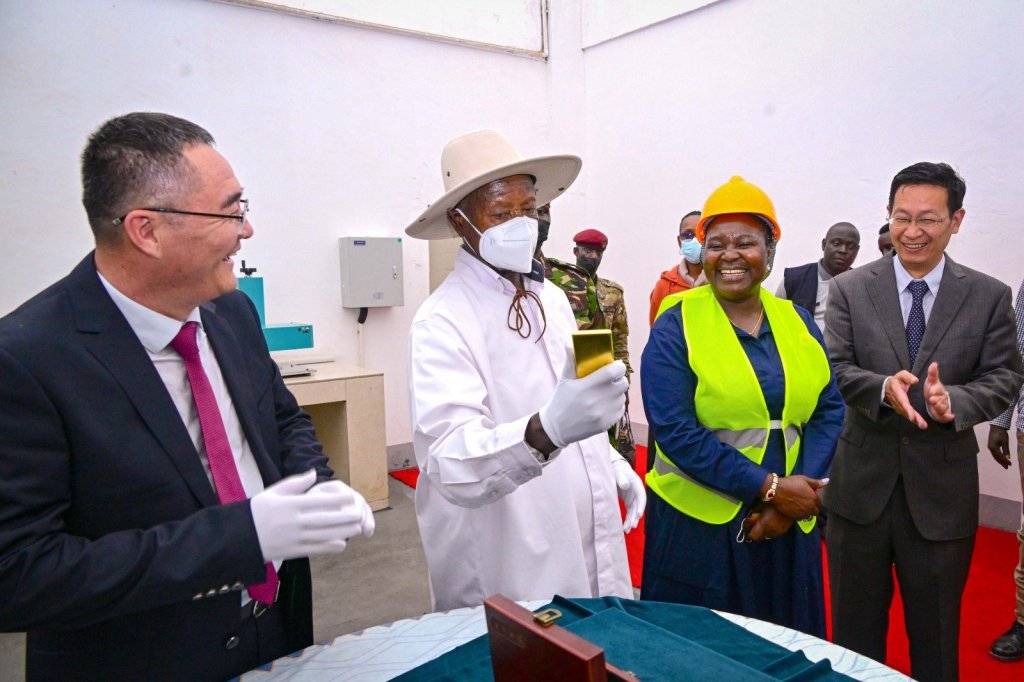
According to him, this initiative has the potential to become the “next Wagagai” referring to the massive Chinese-funded gold refinery project and could generate over USD 600 million (Shs 2.3 trillion) annually for the next 40 years.
“We already have the technical capacity, the academic backing, and the natural resources. What we need now is support from the Ministry of Energy and Mineral Development to make this a reality,” he said.
The leaders are also pushing for amendments to the current Act. They want Section 178(1), which grants the state 15% free ownership in mining ventures, increased to 35%, arguing that a greater national stake would improve accountability and public benefit.
They are also demanding the deletion of Section 178(4), which they say undermines transparency and weakens state oversight in the mining sector.
Community voices at the meeting were equally passionate. William Wandera, a resident affected by mining, expressed his frustration over land compensation practices.
“They take our land and give us peanuts. Some families are given less or Shs 500,000 for land that has gold. That money can’t even buy an acre anywhere else. It’s exploitation,” Wandera said.
Juma Yahaya, another local, called out the steep costs associated with obtaining a mining license, saying it locks out ordinary Ugandans from participating in the sector.
In response to the rising concerns, Agness Alaba, Commissioner for Mining at the Ministry of Energy and Mineral Development, assured the stakeholders that their grievances would be reviewed and addressed appropriately.
“We have taken note of all the issues raised here, and we are going to look into them carefully before reporting back. We recognize the importance of ensuring that host communities benefit from the resources under their feet,” Alaba said.
However, she also warned local miners against attempts to manipulate the licensing process or engage in illegal activities.
SOURCE: https://nilepost.co.ug/news/290985/busia-leaders-demand-mining-act-review-push-for-fair-royalties

 madaraka.online