
EXECUTIVE SUMMARY –
Tanzania’s mining reforms, particularly the requirement to process minerals locally, have generated about 5.8 trillion Tanzanian shillings in added value, marking a major shift from raw exports to domestic industrialisation and stronger economic retention. (Daily News)
The reforms have also boosted local business participation and youth opportunities through job creation, licensing, and procurement policies, though employment gains remain modest due to the capital-intensive nature of the sector. (Daily News)
Keywords: Tanzania mining, reforms, value addition, local processing, mineral economy, youth employment, local content, industrialisation
Tanzania Daily News (Dar es Salaam) By Mariam Said
Dodoma —
- Expansion of local refineries sparks value addition
THE expansion of local mineral refineries has begun to yield significant results, with Tanzania adding value to minerals worth 5.802tri/-, according to the latest report by the Mining Commission.
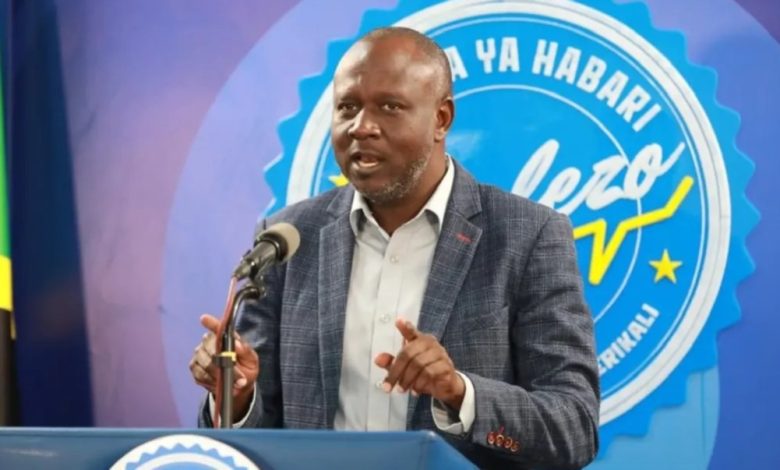
Updating journalists on the implementation of development projects and youth opportunities in the mining sector for the 2025/2026 financial year, the Commission’s Director of Mines Inspectorate and Environment, Engineer Hamisi Kamando said the initiative has created 273 jobs, the majority of which have benefited young people.
Eng Kamando, who spoke on behalf of the Commission’s Executive Secretary Ramadhani Lwamo, said the achievements were made possible by improved policy and legal frameworks established by the government through the Ministry of Minerals.
“These achievements have been made possible by a favourable policy and legal environment that requires raw minerals produced in the country to be processed locally before export,” he said.
He noted that Tanzania currently hosts several operational refineries, including Mwanza Precious Metals Refinery Limited, Geita Gold Refinery Limited, Eyes of Africa Refinery, Banjul Limited and Sab Gold Limited, as well as lapidary centres in Arusha and Dar es Salaam.
On the implementation of Local Content Regulations in the mining sector, Eng Kamando said mines procured goods and services worth 3.8tri/- from Tanzanian companies between July and December 2025.
“Twenty categories of goods and services have been reserved exclusively for companies that are 100 per cent Tanzanian-owned, enabling local firms, including those owned or employing youth, to benefit more from the mining sector,” he said.
Meanwhile, the government has earmarked 65 mining areas for allocation to small-scale miners in mineral-rich regions including Geita, Shinyanga, Mwanza, Mara, Mbeya and Ruvuma, among others.
Eng Kamando said most of the areas are intended for youth aged between 18 and 45 years in a bid to expand their participation in the mining sector.
He noted that between July and December 2025, the government issued 5,983 mining licences, representing 71 per cent of all licences granted during the period, with a significant number applied for by young people.
Through the Mining for Better Tomorrow (MBT) project, the Commission also issued 273 licences to 183 youth groups, creating direct employment for 2,550 young people in activities such as gold mining, copper extraction, gemstone mining, salt production and quarrying of construction materials.
Eng Kamando added that the Commission recently signed a Memorandum of Understanding with CRDB Bank to facilitate access to capital for small-scale gold miners, particularly youth.
“We encourage young Tanzanians to take advantage of these opportunities and invest in the mining sector,” he said.
The Commission is also working closely with the Geological Survey of Tanzania (GST) and the State Mining Corporation (STAMICO) to enhance access to geological data and build the capacity of young people in modern mineral exploration and mining technologies.
Looking ahead to the 2026/2027 financial year, Eng Kamando said the Mining Commission will prioritise several initiatives aimed at creating more opportunities for youth in the sector.
These include the construction of offices for Resident Mining Officers, tenders for which will soon be announced.
“We encourage young people to closely follow these opportunities and participate in the implementation of the projects,” he said.
He added that the Commission also plans to expand local gemstone auctions and exhibitions, while allocating more mining areas to youth in different regions depending on the types of minerals available.
Eng Kamando further said the Commission will continue strengthening collaboration with the Geological Survey of Tanzania and STAMICO to improve access to geological data and enhance youth capacity in the use of modern exploration and mining equipment.
In addition, the Commission plans to work closely with financial institutions and banks to establish better financing mechanisms that will enable young people to access capital for investment in the mining sector.
SOURCE:

 madaraka.online